Marrakech souvenirs range from a €2 ceramic bowl to a hand-knotted rug that costs more than your flight. This guide shows what is worth buying, what a fair price looks like and how to shop relaxed with children. It is written by the team behind Dar Bassidi, a holiday home in Marrakech.
What do Marrakech souvenirs cost? A fair price guide
Fair souvenir prices in Marrakech depend on quality, size and how well you haggle. The ranges below are typical prices for tourists in the Medina. Treat them as a guide, not a fixed tariff.
| Souvenir | Typical price | Suitcase-friendly? | Where to look |
|---|---|---|---|
| Babouches (leather slippers) | €10–30 | Yes | Souk Semmarine, Ensemble Artisanal |
| Spice bundle | €5–20 | Yes | Rahba Kedima, Souk El Attarine |
| Argan oil, cosmetic, 100 ml | 50–150 MAD (€5–14) | Checked luggage | Cooperatives, specialist shops |
| Small ceramic bowl or plate | from 20 MAD (€2) | Yes, wrapped well | Souk Fekharine |
| Plain cooking tajine | 20–100 MAD (€2–9) | Bulky but light | Souk Fekharine |
| Lightweight metal lantern | 100–500 MAD (€9–47) | Yes | Souk Haddadine |
| Small leather bag | €20–60 | Yes | Leather souks, workshops |
| Small drum for kids | about 100 MAD (€9) | Yes | Souk Kimakhnine |
| Small rug | €80–250 | Fold or ship | Carpet souks, rug shops |
| Large rug (3 × 4 m) | 1,500–3,500 MAD (€140–330) and up | Ship | Rug shops, Souk Zrabia |
Prices: Marocmama and MarHire, euro values converted at about 10.7 MAD per euro. Prices change with season, quality and haggling.
The best Marrakech souvenirs, one by one
Babouches
Babouches are soft leather slippers with a folded-down heel, made in every colour. They are light, flat and easy to pack. Check the stitching and the sole: a glued sole wears out much faster than a stitched one.
Ceramics and tajines
Hand-painted ceramics from Marrakech and Safi are among the most popular souvenirs. Small bowls and plates are cheap and travel well when wrapped in clothes. A tajine for cooking should be unglazed or labelled as food-safe; decorative tajines are often for display only.
Lanterns
Metal lanterns cast patterned light and are a classic souvenir from Souk Haddadine. Lightweight lanterns are cheaper and easier to carry. Heavier metal lasts longer and costs more.
Spices
Ras el hanout is a Moroccan spice blend with up to several dozen spices; every shop mixes its own. Buy spices in sealed bags and smell them before you pay. Rahba Kedima, the old spice square in the Medina, is the classic place to shop.
Argan oil and natural cosmetics
Argan oil comes from the nuts of the argan tree, which grows in south-western Morocco. Cosmetic argan oil is pressed from raw kernels; culinary argan oil comes from roasted kernels and smells nutty. Black soap (savon beldi) and ghassoul clay, used in the hammam, are cheap and light.
Leather bags
Leather bags, wallets and poufs are made in the leather souks of the Medina. Smell the leather and check the inside seams. Workshops often charge less than shops on the main souk streets.
Rugs
Berber rugs are hand-woven by Amazigh (Berber) women, mostly in the Atlas Mountains. Prices vary hugely with size, knot density and age. Take your time, compare several shops and never feel obliged to buy after a glass of tea.
Souvenirs kids love to choose themselves
Children enjoy souvenir shopping most when they get their own small budget and choose for themselves. These Marrakech souvenirs are cheap, light and hard to break:
- Small drums (darbuka or bendir): about 100 MAD in Souk Kimakhnine, the musical instrument souk.
- Children’s babouches: in bright colours and small sizes.
- Leather or wooden camels: a popular keepsake from the Medina stalls.
- Small painted ceramic bowls: a first piece of Moroccan tableware for their room.
- Woven baskets and bags: useful for carrying their other treasures.
Tip for parents: agree on a budget per child in dirham before you enter the souks. Counting coins is a good maths lesson, and it keeps impulse buys in check.
Where to shop in Marrakech: souks or fixed-price shops?
The souks of the Medina offer the widest choice and the lowest prices for good hagglers. The Ensemble Artisanal on Avenue Mohammed V sells local crafts at fixed, displayed prices, which are a little higher but stress-free (Holiday Expert). Designer boutiques and concept stores also work with fixed prices and curated quality, at higher prices.
| Where | Prices | Best for |
|---|---|---|
| Souks of the Medina | Lowest, if you haggle | Choice, atmosphere, confident shoppers |
| Ensemble Artisanal | Fixed, slightly higher | Families, first visits, checking fair prices |
| Boutiques and concept stores | Fixed, highest | Design pieces, gifts, little time |
A good strategy: visit the Ensemble Artisanal first to see real fixed prices, then go to the souks. With bags full of ceramics and a tired child, a taxi back is worth it. Our guests can book a transfer through Dar Bassidi for a fee depending on the destination.
How to haggle in Marrakech without stress
Haggling in Marrakech is a normal part of shopping in the souks, not a fight. Keep it friendly and follow these steps:
- Decide what the item is worth to you before you ask the price.
- Ask the price and react calmly, whatever you hear.
- Offer around a third to half of the first price and meet in the middle.
- Only start haggling if you really want to buy.
- Walk away politely if the price stays too high. Often the seller calls you back.
- Pay in cash, in dirham. Small notes make it easier.
Do not haggle hard over a few dirham on a cheap item. For the seller, it can be a meaningful amount; for you, it is less than a coffee at home.
How to spot fake souvenirs
Unusually low prices often mean lower quality or imitations (MarHire). Watch out for these classics:
- Argan oil: real cosmetic argan oil has almost no smell and is not sticky. A heavy perfume or a very low price are warning signs. Women’s cooperatives are a reliable source.
- Saffron: real saffron comes as thin red threads and is expensive. Very cheap “saffron” is often dyed plant fibre.
- Leather: real leather smells like leather and the edge shows fibres. Plastic has a smooth, even edge.
- “Antique” rugs: a rug can be artificially aged. Ask for the region and age, and judge the rug by what you see, not the story.
How to get your souvenirs home
Packing is easier when you plan it before you shop. Keep these rules in mind:
- Liquids: argan oil and rose water go in checked luggage unless the bottles fit your airline’s hand-luggage rules for liquids. Seal them in a zip bag.
- Fragile items: wrap ceramics and glass in clothes and pack them in the middle of the suitcase. Ask the seller to wrap them in paper too.
- Rugs: small rugs can be folded into a suitcase. For large rugs, agree on the total shipping price, tracking and insurance in writing before you pay, and photograph the rug and the receipt (MarHire).
- Customs allowance: flying back into the EU, each adult can bring goods worth up to €430 duty-free, children under 15 up to €175 (German Customs). Keep receipts for larger purchases.
Make your own souvenir in a workshop
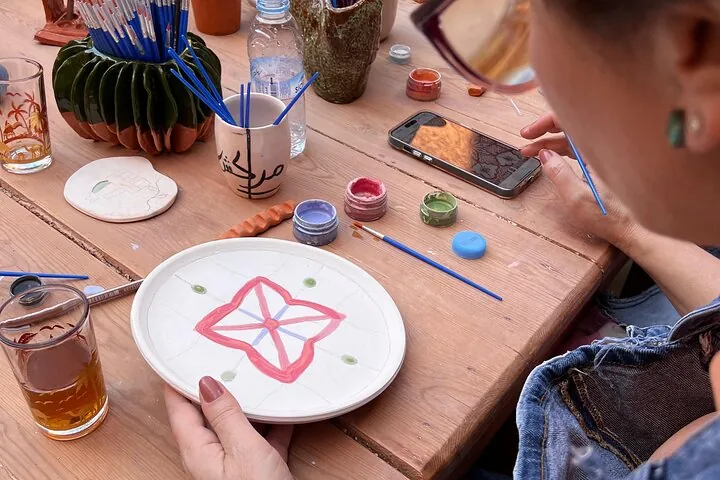
The most personal souvenir from Marrakech is one you made yourself. In a pottery, crochet or canvas painting workshop, children and adults create their own piece with local artisans and take it home.
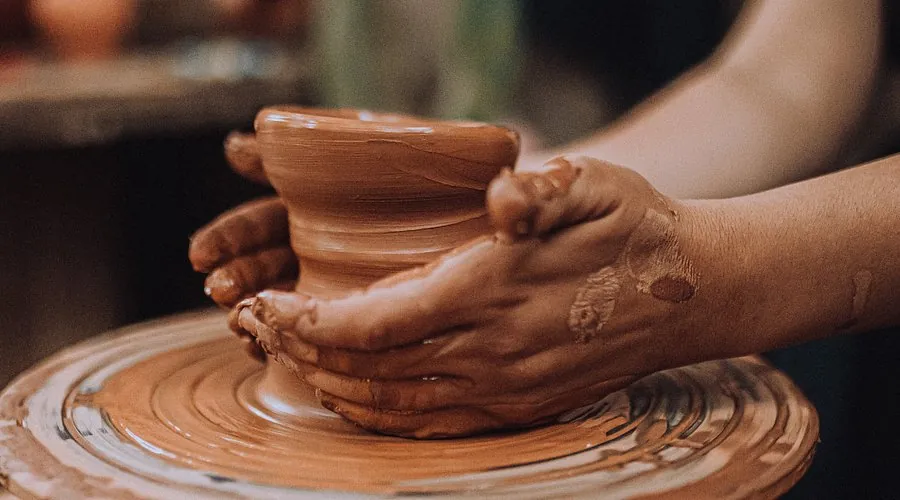
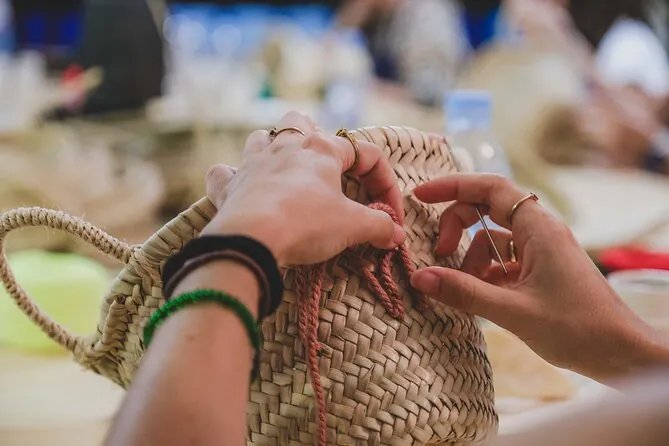
Full disclosure: Morocco Voyage is our own partner brand. Our creative workshops cost €50 per person, can be booked for two people or more and include pickup from Dar Bassidi.
Our tip: plan a relaxed souvenir day
The best Marrakech souvenirs are the ones you choose without pressure. Check fixed prices at the Ensemble Artisanal, give each child a small budget, and save the souks for a morning when everyone is rested. Leave a little room in your suitcase, or pack a foldable bag.
Looking for a calm base for your family trip? Dar Bassidi is a private holiday home for up to 8 guests, with three pools in the residence and a free 24/7 airport shuttle. Check availability and book direct.
Frequently asked questions
What is the best souvenir to buy in Marrakech?
The most popular Marrakech souvenirs are babouche slippers, hand-painted ceramics, spices, argan oil, metal lanterns and Berber rugs. For a small budget and a small suitcase, babouches, spices and ceramic bowls are the best choice. For a long-lasting piece, a rug or a lantern is worth the extra effort.
How much should I pay for babouches in Marrakech?
Babouches typically cost around €10–30 in Marrakech, depending on the leather, the sole and your haggling. Stitched soles and soft, even leather are signs of better quality. Fixed-price shops such as the Ensemble Artisanal help you check what a fair price looks like before you haggle in the souks.
Do I have to haggle in Marrakech?
Haggling is expected in the souks of the Medina, but not in fixed-price shops, supermarkets or the Ensemble Artisanal. Start lower than the first price, stay friendly and walk away politely if you cannot agree. If you prefer not to haggle at all, fixed-price shops are a good alternative.
Can I take argan oil in my hand luggage?
Argan oil counts as a liquid, so hand-luggage liquid rules apply at the airport. Small bottles that fit those rules can go in hand luggage; larger bottles belong in checked luggage. Seal every bottle in a zip bag to protect your clothes from leaks.
How much can I bring back from Morocco to the EU without paying duty?
Air travellers entering the EU from Morocco can bring goods worth up to €430 per adult and up to €175 per child under 15 without paying duty. Separate limits apply to alcohol and tobacco. Keep receipts for larger purchases such as rugs.
What are good souvenirs from Marrakech for kids?
Good souvenirs for kids are small drums, colourful children’s babouches, leather or wooden camels, small painted bowls and woven baskets. They are cheap, light and hard to break. A pottery or painting workshop also lets children make their own souvenir to take home.
Sources
- Marocmama: What to buy in Marrakech – prices in dirham, souk locations (accessed November 2026)
- MarHire: Marrakech souk shopping guide – prices in euro, shipping, fakes (accessed November 2026)
- Holiday Expert: Ensemble Artisanal – fixed-price shopping (accessed November 2026)
- German Customs: Travellers’ allowances – EU duty-free allowance (accessed November 2026)
- ValutaFX: MAD to EUR 2026 – exchange rate (as of mid-2026)